• About
    LeConte-Menu-sm-300.jpg

    In 2009, Zaytuna College was founded in Berkeley, California, with a mission that called for grounding students in the Islamic scholarly tradition as well as in the cultural currents and critical ideas shaping modern society.

  • Academics
    student-book-writing-small.jpg

    Zaytuna College aims to educate and prepare morally committed professional, intellectual, and spiritual leaders who are grounded in the Islamic scholarly tradition and conversant with the cultural currents and critical ideas shaping modern society.

  • Admissions & Aid
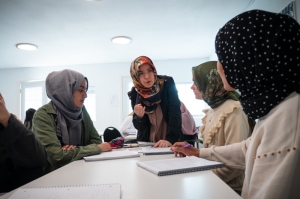
    teacher-students-sisters-small.jpg

    Our mission is to educate students to become morally, intellectually, and spiritually accomplished individuals ready to contribute to our contemporary world in ways that are proportionate to their gifts and to the needs of human society.

  • Campus Life
    sisters-looking-out-window-small.jpg

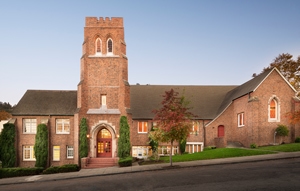
    Zaytuna’s campus is on Holy Hill and students enter the College as part of a cohort, a community of learners that travel together through the curriculum.

Yusuf Lenfest

Yusuf Lenfest

Yusuf Lenfest is an historian and scholar of religion with research specialties in Islamic law and theology, Jewish studies, socio-legal history, and philosophy. At Zaytuna he teaches courses in trivium grammar and rhetoric, politics, and Islamic legal theory.

He received his BA in English Literature and Philosophy, cum laude, from the University of Vermont, MSc in Political Theory from the London School of Economics and Political Science, MTS from Harvard University, Graduate Certificate in Jewish Studies from the University of Southern California, and is currently completing his PhD under the tutelage of Dr. Sherman Jackson, also at the University of Southern California. He also holds ijāzāt in several Islamic subjects and has completed non-degree coursework at institutions such as Dar al-Mustafa, University of Damascus, Johns Hopkins University, and Middlebury College.

His dissertation explores classical Muslim debates about acts before revelation and reveals how Islamic law functions as an evolving nomos--a world of patterned meaning sustained by legal memory that organizes social life--rather than merely as an extension of divine command. It argues that these debates point to a distinctive form of legal sovereignty in which religious and non-religious normativity are formally distinguished yet materially intertwined.

From 2017-2018 he was a Student Fellow at the Petrie-Flom Center for Health Law Policy, Biotechnology, and Bioethics at Harvard Law School; and he is currently a Fellow in the inaugural cohort of Templeton Pluralism Fellows (2025-2027).

He is fluent in Arabic, conversationally proficient in French, and can read French and Judeo-Arabic.