We All Need Good Company
Alum Omar Bayramoglu on Chaplaincy for the Incarcerated
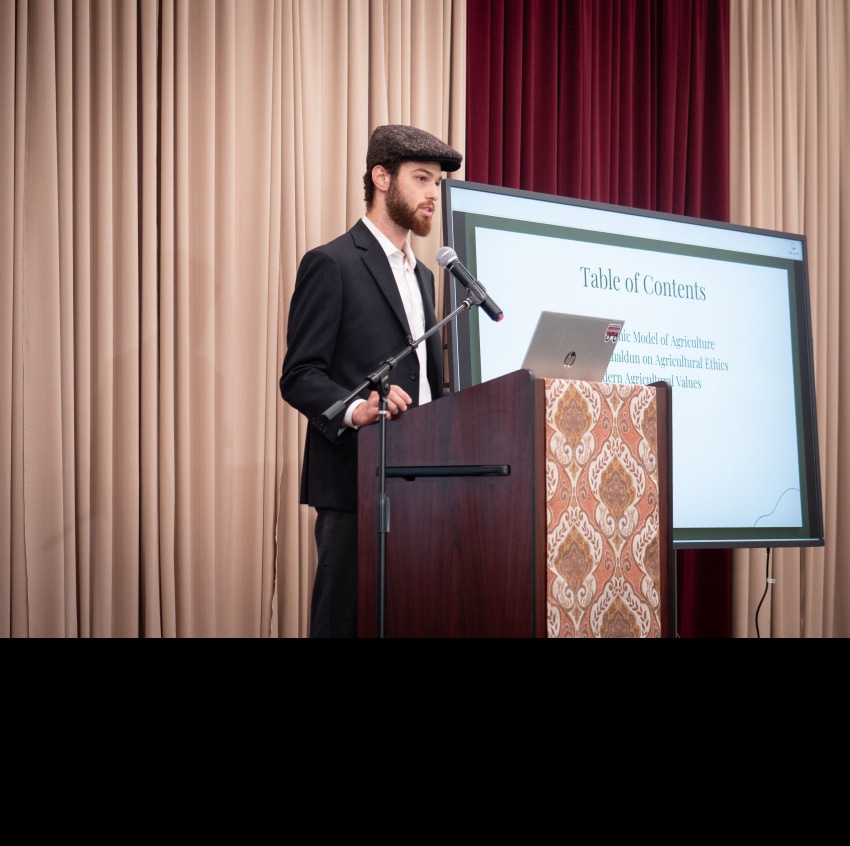
If a liberal arts education frees the mind, what can education do for someone confined to a prison cell? As a chaplain who serves the incarcerated, Omar Bayramoglu (Class of 2016) often ponders this question. “My Zaytuna education gave me the tools of freedom and understanding and trained me to discern what is essential,” he says. “Now I try to make that knowledge accessible to others in the most practical way I can.”
For the people he serves, who are awaiting trial or sentencing, Omar sometimes acts as a kind of translator, distilling the kinds of scholarly conversations he once had at Zaytuna into more accessible language. As they struggle to adjust to confinement, he does his best to convey that they still have the freedom to choose to live by God’s rules, and that no amount of steel or concrete can separate them from the divine. In his role of supporting the entire incarcerated population he has supervised Jewish services and built rapport with Jewish inmates; participated in Catholic services with inmates who are now teaching him Spanish; and worshipped and had meaningful conversations with a wide range of Muslims, most but not all of whom are converts.
Growing up in New Jersey, he thought there was just one way to be Muslim. The diversity he encountered at Zaytuna, as well as an education that expanded his understanding of Islam, prepared him to relate to Muslims with very different backgrounds. At Zaytuna he discovered rich theological conversations that unfolded among Muslims over a thousand years. Learning Islamic history showed him how immense the Muslim world once was. And within Sunni Islam he discovered varieties of opinions, laws, and methodologies. All of this serves him in his work today.
Omar previously served as a chaplain on a college campus. College kids and incarcerated individuals, he points out, share something in common with the rest of us. “Regardless of age, background, or the nature of our problems, we all need good company,” he says. Each day at work he strives to be someone with whom people feel comfortable having honest conversations and facing difficult truths, someone they can trust to walk with them through difficulty. Omar points out that his workplace is not all darkness. Like anywhere else in the world, there is both light and shadow. Wherever there are people, he says, there is a need for patience.
If he could repeat his four years at Zaytuna all over again, Omar says, he wouldn’t hesitate. “What makes Zaytuna so special is that the entire community is held together by sacred knowledge... praying together, studying together, the kinds of conversations we had together — this is what made Zaytuna remarkable,” he says. “It wasn’t perfect — but if I could do those four years at Zaytuna all over again, I wouldn’t hesitate.”
“A Zaytuna education is a chance at transformation,” he says. “It’s not guaranteed, but if you are patient and committed to the process and the education, it will change your life.” During his undergraduate years, he recalls, Imam Dawood Yasin introduced him to the idea of experiential tawheed, or having an embodied experience of the oneness of God. “At Zaytuna tawheed became more than an abstract concept; I actually became perceptive to its reality.”
Sign up here to receive Omar’s reflections about Islam, America, and society; or to listen to Muslim American Stories, the new podcast he and his wife launched featuring real life stories about regular American Muslims.